The Truth About Glaucoma: Why It Often Has No Symptoms Until Vision Is Permanently Lost
Glaucoma is one of the leading causes of irreversible blindness worldwide, primarily because it strikes without warning. Learn how to protect yourself.
The Silent Thief of Sight
Imagine a disease that slowly steals your peripheral vision over years, completely unnoticed, until you suddenly realize you are looking at the world through a narrow tunnel. This is the reality of glaucoma. It is notoriously called the "silent thief of sight" because, in its most common form (open-angle glaucoma), there are absolutely no early warning signs. No pain, no redness, and no noticeable change in vision until the damage is severe and permanent.
What Exactly is Glaucoma?
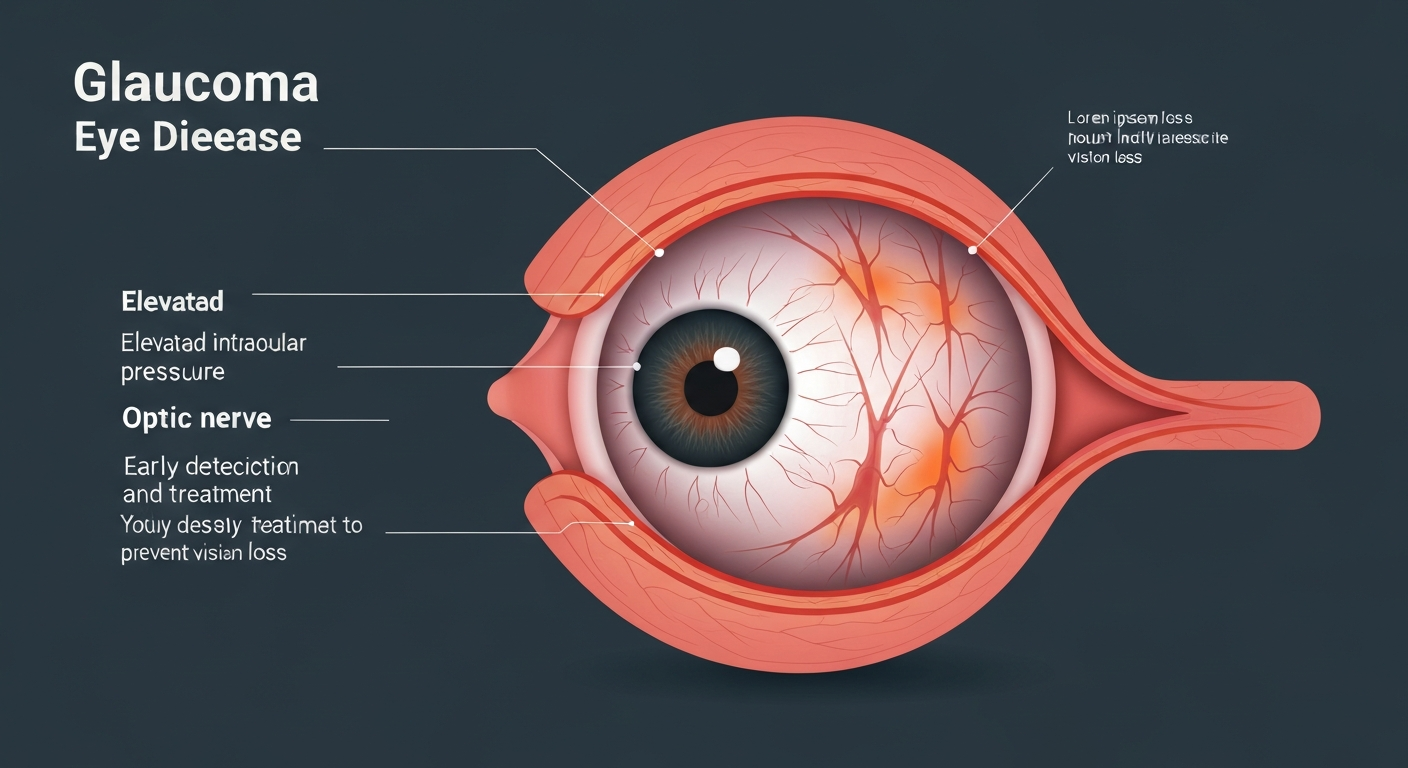
Glaucoma is not a single disease, but a group of eye conditions that damage the optic nerve—the vital cable that transmits visual information from your eye to your brain. This damage is most often, though not always, caused by an abnormally high pressure inside your eye (intraocular pressure).
Your eye constantly produces a fluid called aqueous humor. If the drainage angle in your eye becomes blocked or sluggish, this fluid builds up, increasing the pressure inside the eye and slowly crushing the delicate fibers of the optic nerve.
Who is at Risk?
While anyone can develop glaucoma, certain factors significantly increase your risk:
- Age: The risk increases dramatically after age 40, and even more so after age 60.
- Family History: Having a parent or sibling with glaucoma increases your risk immensely.
- Medical Conditions: Diabetes, heart disease, high blood pressure, and sickle cell anemia are known risk factors.
- Eye Anatomy: Corneas that are thinner than average or extreme nearsightedness/farsightedness can play a role.
The Importance of Early Detection
Because vision lost to glaucoma cannot be restored, early detection is the only way to prevent blindness. During a comprehensive eye exam at Allure Eyecare Ltd, we don't just check if you need glasses. We perform specific tests to screen for glaucoma:
- Tonometry: Measures the pressure inside your eye.
- Ophthalmoscopy: Allows us to examine the shape and color of your optic nerve.
- Perimetry (Visual Field Test): Maps out your complete field of vision to detect subtle peripheral vision loss.
- Pachymetry: Measures the thickness of your cornea.
Treatment Options
If caught early, glaucoma can usually be managed effectively. Treatment aims to lower eye pressure to prevent further nerve damage. This is typically achieved through:
- Prescription Eye Drops: The most common initial treatment, designed to either decrease fluid production or improve drainage.
- Laser Therapy: Procedures like Selective Laser Trabeculoplasty (SLT) can help open clogged drainage canals.
- Surgery: In advanced cases, surgical procedures may be necessary to create a new drainage channel.
Professional Recommendation
Do not wait for symptoms to appear. If you are over 40, or if you have any risk factors, you must have a comprehensive eye examination that includes glaucoma screening every 1 to 2 years. At Allure Eyecare Ltd, we have the advanced diagnostic equipment needed to catch glaucoma in its earliest, most treatable stages.
Frequently Asked Questions
Is glaucoma curable?
Currently, there is no cure for glaucoma, and vision lost to the disease cannot be restored. However, with early detection and proper treatment, the progression of the disease can usually be halted, preventing further vision loss.
Can I have glaucoma if my eye pressure is normal?
Yes. This is known as Normal-Tension Glaucoma. The optic nerve becomes damaged even though the eye pressure remains within the 'normal' range. This is why comprehensive exams that look at the nerve, not just the pressure, are vital.
Related Articles
Cataracts Explained: Early Signs, Causes, Treatment Options, and When You Should See an Eye Specialist
Experiencing cloudy or blurry vision? It might be cataracts. Learn about the early warning signs and how this common condition can be effectively treated.

The Silent Vision Thief: 12 Early Warning Signs You Should Never Ignore Before It's Too Late
Many serious eye conditions develop without obvious symptoms. Learn the subtle warning signs that indicate you need an immediate eye examination to protect your vision.

Could Your Daily Screen Time Be Damaging Your Eyes? What Every Professional, Student, and Parent Needs to Know
In our digital world, screens are unavoidable. Discover how excessive screen time impacts your eye health and learn practical, evidence-based strategies to protect your vision.
Need Professional Eye Care Advice?
Don't leave your vision to chance. Our experienced optometrists at Allure Eyecare Ltd are ready to help you maintain healthy eyes and clear vision.